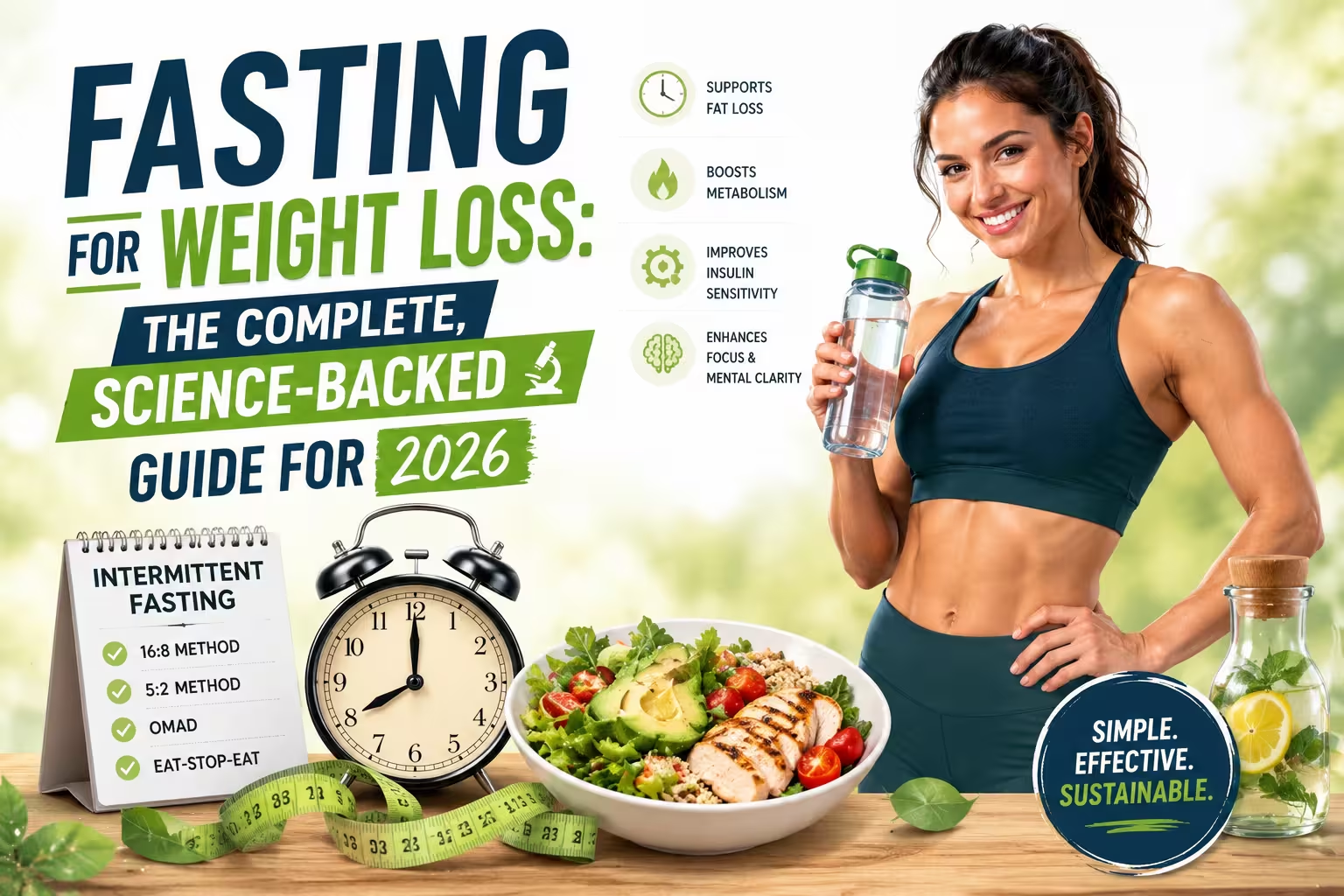
Fasting for Weight Loss: The Complete, Science-Backed Guide for 2026
There’s a moment most people experience at some point in their relationship with food and weight — usually around 10 o’clock at night, staring into the refrigerator for the third time — where they wonder whether they’ve been approaching this whole thing completely wrong.
Maybe the answer isn’t what you eat. Maybe it’s when you eat.
That’s the central premise of fasting for weight loss. And over the last decade, it’s gone from a fringe idea practiced by biohackers and religious devotees to one of the most studied dietary interventions in metabolic science. A landmark systematic review and network meta-analysis published in the BMJ in June 2025 — drawing on all available randomized clinical trials up to November 2024 — found that all forms of intermittent fasting produced meaningful weight loss compared to unrestricted eating, with certain protocols outperforming even continuous calorie restriction.
But fasting is not one thing. It’s a family of approaches, each with different mechanisms, strengths, and ideal candidates. Done right, it’s one of the most powerful tools in your metabolic toolkit. Done naively — without understanding what’s actually happening inside your body — it can waste your time, cost you muscle, and leave you more frustrated than when you started.
This guide covers every major protocol, the biology of fasting, what the latest research actually says, and who benefits most.
Table of Contents
- What Happens Inside Your Body When You Fast
- The Fasting Timeline: Hour by Hour
- Every Major Fasting Protocol Explained
- Fasting vs. Calorie Restriction: What the Research Says
- Fasting and Muscle Mass: The Truth
- Hormones, Autophagy, and the Deeper Benefits
- How to Break a Fast and What You Can Drink
- Fasting for Women: Important Differences
- Who Should Be Cautious
- The Most Common Mistakes
- Frequently Asked Questions
1. What Happens Inside Your Body When You Fast
Your body operates in two fundamentally different metabolic modes: the fed state and the fasted state. Most modern people spend the vast majority of their waking hours in the fed state — perpetually topped up with glucose from meals and snacks spread across 14–16 hours of daily eating.
In the fed state: blood glucose is elevated, insulin is elevated, your body is storing glycogen, and fat burning is actively suppressed. Insulin blocks lipolysis — the release of fat from fat cells.
About 8–12 hours after your last meal, the transition begins. In the fasted state: insulin drops significantly, the liver depletes its glycogen stores, fat cells begin releasing stored fatty acids into circulation, and the liver converts some of those fatty acids into ketone bodies — an alternative fuel for the brain and organs.
This metabolic switch — from glucose-burning to fat-burning — is the fundamental mechanism of fasting-induced fat loss. The longer you stay in the fasted state, the deeper into fat-burning territory you go.
The important context most nutrition discussions skip: for most of human history, periods of not eating were built into life by necessity. The fasted state isn’t an emergency mode — it’s a normal physiological state the body was designed to operate in regularly. Modern eating patterns (three meals plus multiple snacks spread across 14–16 waking hours) mean many people never fully enter the fasted state. Insulin never fully drops. The fat-burning switch never fully flips.
2. The Fasting Timeline: Hour by Hour
Timeframe What’s Happening 0–8 hours Digestion, blood glucose declining, glycogen reserves drawing down 8–12 hours Insulin genuinely low, fat oxidation begins meaningfully increasing 12–16 hours Ketone production begins, growth hormone rising, fat burning primary fuel 16–24 hours Established ketosis, GH substantially elevated, early autophagy signals 24–48 hours Deep ketosis, marked increase in insulin receptor expression, autophagy meaningfully elevated 48–72 hours Peak fat oxidation, pronounced anti-inflammatory effects, autophagy peaks; medical supervision advised beyond this A key research finding from 2025: autophagy is typically initiated after approximately 16 hours of fasting, with its activity progressively increasing as fasting duration extends, culminating in pronounced effects after 72 hours. This dose-dependent relationship explains why different protocols produce different benefits beyond just weight loss.
3. Every Major Fasting Protocol Explained
16:8 — The Entry Point (Most Popular)
How it works: Fast 16 hours, eat within an 8-hour window. Most commonly: no eating before noon, stop eating at 8 PM.
Why it works: Two mechanisms operate simultaneously. First, most people spontaneously consume 300–500 fewer calories simply by removing a meal from their day without deliberate restriction. Second, the 16-hour fast brings insulin to its lowest daily levels and produces a meaningful fat-burning window before the first meal.
What the research shows: A 2025 meta-analysis in the International Journal of Obesity, analyzing 15 randomized trials combining time-restricted eating with exercise, concluded that TRE consistently reduced fat mass and body fat percentage while preserving muscle mass. A 2025 study in Nutrients specifically comparing early TRE (8 AM–2 PM window) versus delayed TRE (12 PM–6 PM) found that early TRE produced greater fat loss — attributed to stronger alignment with circadian rhythms.
Best for: Everyone starting out. It’s flexible, socially manageable, and sustainable as a long-term lifestyle.
18:6 and 20:4 — Tightening the Window
18:6 (18 hours fasting, 6 hours eating) is the natural next step once 16:8 feels comfortable. Most people eat two meals within the window — a substantial early-afternoon meal and dinner. The additional two fasting hours extend fat-burning, deepen ketone production, and typically produce more calorie reduction because there’s simply less time available to eat.
20:4 (The Warrior Diet) compresses eating into a 4-hour window, typically in the late afternoon or evening. At 20 hours of fasting, most people are in genuine daily ketosis, and fat oxidation is significant. The critical requirement: eating enough protein within the compressed window — roughly 0.7–1g per pound of body weight — to prevent muscle loss.
Best for: Experienced fasters looking for more aggressive fat loss without moving to full fasting days.
OMAD — One Meal a Day
All daily calories in a single sitting, once per day. Fasting window: 22–23 hours.
The weight-loss case for OMAD is real: a single meal makes caloric surplus physically difficult, daily ketosis is deep and consistent, and the radical simplicity eliminates food decision fatigue entirely. Some people genuinely thrive on it.
The non-negotiable: that single meal must contain sufficient protein. Forty to eighty grams minimum, more for larger, more active individuals. OMAD without adequate protein is a reliable path to losing muscle alongside fat — which lowers your metabolic rate and worsens body composition even as the scale drops.
Best for: Highly experienced fasters who have confirmed they can hit protein targets in one sitting. Not for beginners.
5:2 Method
Eat normally five days a week. On two non-consecutive days, restrict intake to 500–600 calories.
The mechanics are straightforward: two days of severe restriction per week create a meaningful weekly calorie deficit without requiring daily dietary management. If your maintenance is 2,200 calories, two 500-calorie days create approximately 3,400 calories of weekly deficit.
A 2024 systematic review found that both fasting strategies and continuous calorie restriction led to weight loss of 5.5 to 6.5 kg at the six-month mark, with fasting producing slightly greater short-term reductions. The psychological advantage of 5:2 is real for many people: knowing that restriction is only two days per week, and that no food is permanently forbidden, makes it more sustainable than daily moderation.
Best for: People who prefer periodic intensity over daily discipline. Works particularly well for those with variable schedules.
Alternate Day Fasting (ADF)
Fast (or eat 500 calories) on alternating days, with unrestricted eating on non-fasting days.
The June 2025 BMJ network meta-analysis found that compared with continuous energy restriction, alternate day fasting was the most effective form of intermittent fasting for body weight reduction. The reason is straightforward — the restriction is more frequent and deeper, creating a larger weekly deficit.
The same research literature is honest about the trade-off: ADF may be more difficult to maintain in the long term. Fasting every other day means hunger may remain consistently elevated because the body never fully settles between fasting days. Dropout rates in ADF studies are higher than less aggressive protocols.
Best for: Short-term aggressive fat loss phases or people with strong external structure and high hunger tolerance.
Extended Fasting: 24, 48, and 72 Hours
24-hour fasts (dinner to dinner, or lunch to lunch) are one of the most metabolically potent single-day interventions available. Glycogen is depleted, ketosis is underway, growth hormone is substantially elevated, and fat oxidation is well established. Many people incorporate one or two per week as a complement to daily time-restricted eating.
48-hour fasts produce deeper physiological changes: after 48 hours, a marked increase in tissue insulin sensitivity becomes evident through upregulation of insulin receptor expression. Growth hormone is significantly elevated; ketone levels are high. Recommended frequency: 1–2 times per month. These are not a weekly practice.
72-hour fasts represent the upper boundary of self-directed fasting for healthy individuals. Autophagy is pronounced, anti-inflammatory effects are significant, and some research points to immune cell renewal. Medical supervision is strongly advised beyond 72 hours, and anyone with underlying conditions should not attempt this without physician clearance.
On weight loss from extended fasts: A significant portion of initial scale movement is water and glycogen loss, not fat. Pure fat oxidation over 72 hours is roughly 1–2 lbs for most people. Extended fasting is most valuable for metabolic health benefits (insulin sensitivity, autophagy, inflammation) rather than as a rapid fat-loss strategy.
4. Fasting vs. Calorie Restriction: What the Research Says
This is the central debate in fasting science. Is fasting actually better than eating fewer calories spread across the day?
The honest 2025 answer: for pure weight loss, they produce similar results when total calories are matched. The BMJ meta-analysis confirmed that all forms of intermittent fasting reduced body weight compared to ad libitum eating, and differences versus continuous calorie restriction were modest for most outcomes.
But fasting has documented advantages in specific areas that restriction alone doesn’t replicate:
Insulin sensitivity: The depth of insulin suppression during fasting — not just average daily levels — produces receptor upregulation effects that modest daily restriction doesn’t.
Autophagy: Cellular cleanup processes are triggered by the duration of nutrient absence, not by calorie reduction per se. You cannot meaningfully activate autophagy by eating 300 fewer calories spread across the day.
Adherence for certain personalities: For people who find daily restriction psychologically exhausting, the structured on/off nature of fasting — where some days or windows are genuinely unrestricted — is significantly more sustainable than the grinding daily awareness of traditional dieting.
Where continuous restriction has the edge: More compatible with consistent athletic performance, easier to distribute protein across the day for muscle preservation, and lower risk of compensatory overeating on unrestricted days.
The practical conclusion: These are different tools producing similar fat-loss outcomes through overlapping mechanisms. The right choice depends on your personality, lifestyle, and specific health goals.
5. Fasting and Muscle Mass: The Truth
The most common concern about fasting is muscle loss. It deserves a precise answer.
Short-duration fasting (up to 24 hours) with adequate protein and resistance training produces minimal to no muscle loss in healthy adults. The research is clear and consistent. Intermittent fasting consistently improves body composition by promoting fat oxidation while maintaining lean mass.
The reason is hormonal: fasting substantially elevates growth hormone — a muscle-protecting, fat-mobilizing hormone. The body’s acute response to short-term fasting is to protect lean tissue and preferentially catabolize fat. Evolutionary logic: you need muscle to hunt and gather; burning it during brief food scarcity would be counterproductive.
When fasting does threaten muscle:
- Inadequate protein during eating windows — the most common cause of muscle loss in fasters. The fasting itself isn’t the problem; it’s under-eating protein when food is available.
- Very large combined deficits with high training volume — aggressive fasting stacked on aggressive restriction stacked on heavy training without adequate recovery nutrition.
- Extended fasting beyond 48–72 hours without careful management.
- No resistance training — without the mechanical stimulus telling the body to maintain muscle, a deficit of any kind promotes catabolism.
The practical bottom line: 16:8 or 18:6 with 0.7–1g of protein per pound of body weight and 3–4 resistance training sessions per week produces fat loss with muscle preservation. Multiple studies specifically confirm this. The combination of time-restricted eating and resistance training consistently outperforms either approach alone.
6. Hormones, Autophagy, and the Deeper Benefits
The Hormonal Cascade of Fasting
Insulin falls to its lowest daily levels during fasting. Since insulin actively suppresses fat release from cells, lower insulin = more fat burning. Chronically elevated insulin (from frequent eating of refined carbohydrates) is a primary driver of insulin resistance and metabolic disease. Fasting’s consistent low-insulin periods improve cellular insulin sensitivity over time.
Growth hormone rises dramatically during fasting — in multi-day fasts, growth hormone pulses become more frequent and larger. This preserves muscle, drives fat breakdown, and supports cellular repair.
Norepinephrine is released during fasting, signaling fat cells to break down stored triglycerides. It also produces the heightened mental alertness many experienced fasters describe in the 16–24 hour range. This is why many people — counterintuitively — report more energy and focus while fasting, not less.
Adiponectin (an anti-inflammatory hormone that improves insulin sensitivity) increases with 16:8 fasting, improving the metabolic and inflammatory environment independently of weight loss.
Autophagy: What It Actually Is
Autophagy (literally “self-eating”) is your cells’ internal recycling and quality-control system. When a cell is under nutrient stress, it breaks down damaged components — misfolded proteins, dysfunctional organelles, pathogens — and recycles the parts. Yoshinori Ohsumi won the 2016 Nobel Prize in Physiology specifically for elucidating this process.
It’s relevant for aging, cancer prevention, neurodegeneration, immune function, and metabolic health. And it’s triggered by the duration of fasting — not by calorie restriction alone.
Research shows autophagy begins ramping up after 16–24 hours of fasting and peaks around 72 hours. The relationship is dose-dependent. Daily 16:8 fasting produces modest but real autophagy activation. Periodic 24-hour fasts produce meaningfully more. The 48–72 hour range produces substantial cellular cleanup — one reason people pursuing longevity and anti-aging benefits beyond weight loss incorporate periodic extended fasts.
For those whose primary goal is weight loss, autophagy is a valuable bonus. For those specifically targeting cellular health and aging, it becomes a primary target.
7. How to Break a Fast and What You Can Drink
Breaking a Fast Properly
After 16–24 hour fasts: No elaborate ritual needed, but a few principles matter. Don’t immediately eat a massive meal — start moderately. Lead with protein (eggs, Greek yogurt, fish, chicken) to blunt the insulin response and begin muscle protein synthesis. Eat slowly — the stomach’s satiety signals take 15–20 minutes to register, and post-fast hunger creates a strong temptation to eat faster than fullness can keep pace.
After 48–72 hour fasts: Start gently. Bone broth, a small amount of fermented foods, soft cooked vegetables, a piece of fruit. Avoid large portions, very fatty meals, and alcohol in the first refeeding meal. The transition back to normal eating should be gradual — refeeding syndrome (serious electrolyte shifts triggered by rapid nutrition reintroduction after prolonged fasting) is a risk in vulnerable individuals and warrants caution.
What You Can Drink During Fasting
| Beverage | Breaks a Fast? | Notes |
|---|---|---|
| Water | No | Gold standard; helps manage hunger |
| Black coffee | No | Modest fat oxidation boost; appetite suppression |
| Plain tea (any) | No | Green tea’s EGCG has additional fat oxidation benefits |
| Sparkling/mineral water | No | Helpful for hunger management |
| Zero-calorie electrolytes | No | Essential for extended fasts; prevents “fasting flu” |
| Coffee with milk/cream | Technically yes | Small amounts have minimal impact; larger amounts interrupt the fast |
| Bone broth | Partially | Protein activates mTOR; useful in extended fasts for electrolytes |
| Juice, smoothies, soda | Yes | Break a fast unambiguously |
The electrolyte note is critical: The fatigue, headaches, and irritability that derail many new fasters are overwhelmingly electrolyte problems, not proof fasting doesn’t work. When insulin drops during fasting, the kidneys excrete more sodium, pulling potassium and magnesium with it. A quarter teaspoon of salt in water during the fasting window — plus electrolyte-rich foods during eating windows — eliminates most of these symptoms.
8. Fasting for Women: Important Differences
The fasting literature often treats physiology as gender-neutral. It isn’t.
The hypothalamic-pituitary-ovarian (HPO) axis — the hormonal system regulating the menstrual cycle — is exquisitely sensitive to energy availability signals. When energy intake drops significantly or consistently, the brain can down-regulate reproductive hormone signaling as a protective response. This means aggressive fasting in women can disrupt or suppress the menstrual cycle — a signal of broader hormonal disruption that affects bone density, cardiovascular health, mood, and fertility.
Women who are already lean, highly active, or chronically stressed are at highest risk. Those with more body fat reserve have more buffer.
Practical recommendations for women:
- Start with a 12:12 or 14:10 window rather than jumping straight to 16:8; assess how your energy, cycle, and mood respond before extending
- Avoid very aggressive protocols (OMAD, ADF, extended fasting) if body fat is already low or you’re in a high-stress period
- Don’t stack a large calorie deficit on top of aggressive fasting — the compounded hormonal signal of energy scarcity amplifies the risk
- Consider cycle syncing: tighter fasting in the follicular phase (week 1–2, post-period) when hunger is more manageable; more flexibility in the luteal phase (week 3–4, pre-period) when metabolic rate is slightly elevated and hunger is hormonally higher
- Warning signs to take seriously: absent or irregular periods, persistent fatigue, declining training performance, mood deterioration — all signals to reduce fasting intensity
The good news: moderate protocols work well for most women. A 2025 study in Nutrients found that early time-restricted eating with resistance training improved fat loss while preserving muscle in young women over 8 weeks with no adverse hormonal effects reported.
9. Who Should Be Cautious
Do Not Fast Without Medical Supervision
- Type 1 diabetes or Type 2 diabetes on insulin or sulfonylureas (hypoglycemia risk is serious)
- Pregnancy and breastfeeding
- Active eating disorders or recent recovery from restrictive eating disorders
- Underweight individuals (BMI below 18.5)
Requires Medical Consultation Before Starting
- Any kidney or liver disease
- Active cancer treatment
- Medications requiring food for absorption or specific timing
- Older adults with low muscle mass or frailty (the consequences of muscle loss are more severe and harder to reverse)
10. The Most Common Mistakes
Overeating in the eating window. The most frequent reason fasting fails to produce expected weight loss. If hunger during the fast leads to consistently eating more when the window opens — particularly high-calorie, ultra-processed foods — the deficit disappears. Higher protein intake, more whole foods, and slower eating address this most reliably.
Inadequate protein. The quietest and most common body composition mistake in fasting. Under-eating protein in the pursuit of a longer clean fast costs you muscle over weeks and months. Hit 0.7–1g per pound of body weight daily, distributed across your eating window.
Starting with the most extreme protocol. OMAD and ADF dominate fasting communities because they’re dramatic. They’re also the protocols most people abandon within weeks. Start with 16:8, adapt for 3–4 weeks, and advance from there.
Ignoring electrolytes. Responsible for the majority of “fasting is too hard” early dropouts. Sodium, potassium, and magnesium depletion during fasting is real and almost entirely preventable. Add salt to water, eat electrolyte-rich foods (leafy greens, avocado, salmon), and consider a zero-calorie electrolyte supplement for longer fasts.
Fighting your natural biology with an incompatible window. There is no universally correct eating window. A genuine morning eater forcing themselves into a noon-to-8 PM window creates unnecessary daily misery. The best eating window is the one you can maintain consistently. Earlier windows (aligned with daylight) do produce marginally better metabolic outcomes per the circadian biology research, but adherence beats optimization every time.
Expecting straight-line progress. Water retention fluctuates enormously — with menstrual cycles, sodium intake, training stress, and glycogen. Daily scale readings are noisy. Look at 10–14 day trend lines, not individual weigh-ins.
11. Frequently Asked Questions
Will fasting slow my metabolism? Moderate intermittent fasting (16:8, 18:6, 5:2) is not associated with the metabolic slowdown that very-low-calorie continuous restriction can produce. Norepinephrine and growth hormone elevation during fasting actually modestly increase metabolic rate short-term. Very extended fasting and aggressive daily restriction can produce metabolic adaptation — but this is true of severe restriction by any method.
Can I exercise while fasting? Yes, for low-to-moderate intensity work. Zone 2 cardio and moderate exercise during the fasting window enhance fat oxidation. High-intensity training and heavy lifting perform better when timed close to the eating window or with a small pre-workout meal. A 2025 International Journal of Obesity meta-analysis found that time-restricted eating combined with exercise consistently outperformed either approach alone for fat mass reduction.
How long does adaptation take? Most people find the first 7–14 days the hardest, primarily from hunger habits tied to previous meal timing and possible electrolyte adjustment. By weeks 3–4, hunger during the fasting window is substantially more manageable for most people — and many are surprised to find they have more energy during fasting hours than they expected.
Why am I not losing weight with fasting? Most likely reasons in order of probability: compensatory overeating in the eating window (more common than people realize); total daily calorie intake still at or above maintenance despite the compressed window; inadequate protein causing muscle loss that offsets fat loss on the scale; water retention masking actual fat loss; or the original TDEE estimate being inaccurate. Track food intake for one week with a food scale — this almost always clarifies the picture.
Is fasting the same as starvation? No. Starvation is involuntary, prolonged deprivation that depletes reserves and deteriorates health. Fasting is a voluntary, structured practice with defined endpoints. The body’s response to a 16–24 hour fast is a normal metabolic state with established hormonal signaling — not an emergency response.
Your Starting Point
Here’s the honest distillation after everything above:
New to fasting: Start with 16:8. Pick a window that fits your actual life. Aim for consistency 5–6 days per week before worrying about 7. Focus on protein. Add salt to your water. Give it 3–4 weeks before evaluating.
Want more than 16:8 gives you: Move to 18:6 or add one 24-hour fast per week. Reassess protein. Add or increase resistance training. Look honestly at what you’re eating in the window — a shorter window full of ultra-processed food underperforms a slightly wider window built on whole foods.
Primary goal is metabolic health beyond weight loss: Periodic 24–48 hour fasts combined with daily 16:8 represents the most comprehensive approach to insulin sensitivity, autophagy, and inflammation markers that current research supports for generally healthy adults.
Have medical conditions: Talk to your doctor first. The research on fasting for type 2 diabetes, fatty liver, and metabolic syndrome is genuinely encouraging — but clinical oversight is not optional in these cases.
Fasting is not magic. It won’t compensate for a diet of ultra-processed food or chronic sleep deprivation. But it’s one of the most well-evidenced, flexible, and genuinely sustainable approaches to fat loss and metabolic health available. The biology is on your side. Use it intelligently.
This article is for informational and educational purposes only. It does not constitute medical advice. Consult a qualified healthcare provider before beginning any fasting protocol, particularly if you have an underlying health condition, take medications, or have a history of eating disorders.
Tags: fasting for weight loss, intermittent fasting, 16:8 fasting, 5:2 diet, OMAD, alternate day fasting, time-restricted eating, fasting and autophagy, fasting hormones, fasting and muscle loss, how to fast, fasting for beginners, best fasting protocol 2026